

Greener Prescribing
On this page you will find information on what we are doing to support greener prescribing practices in Somerset
Medicines account for ~25% of emissions within the NHS in England
and two thirds of the primary care carbon footprint
Somerset Medicines Green Carbon Footprint Strategy
In Somerset we have a number of workstreams to support greener prescribing practices

Antimicrobial

Deprescribing
Formulary

Infant Feeding

Medicines Waste

Respiratory

Scorecard

Skills Not Pills
Antimicrobial
Antimicrobial Stewardship is an area of utmost importance to us, which we have worked hard on over the years.
We have a webpage dedicated especially to the topic - see NHS Somerset Infection Management where you will find our evidence based guidance on managing common infections, as well as a multitude of useful resources for both prescribers and patients.
We encourage everyone to pledge to Become an Antibiotic Guardian
Every year we promote World Antimicrobial Resistance Awareness Week and European Antibiotic Awareness Day
We introduced two new measures to the antimicrobial indicator in our Prescribing and Quality Improvement Scorecard in 2024/25, which focus on appropriate duration of courses of amoxicillin 500mg capsules and doxycycline 100mg capsules. These antimicrobials will be monitored for five day prescribing in accordance with the infection management guidance.
The antibiotic duration of therapy workstream is one of 16 national medicines optimisation opportunities. “Research increasingly demonstrates that short courses of antibiotics are as effective as longer courses in treating patients with uncomplicated infection (Lee et al, 2023), (Garwan et al, 2023). Reflecting this evidence, NICE guidance for common infections routinely recommends the shortest effective course of treatment, to reduce selection pressure for antimicrobial resistance and inadvertent patient harm from antibiotic treatment. Five-day courses are recommended when antibiotics are indicated for sinusitis, sore throat, COPD infective exacerbation, cough (acute), pneumonia (community-acquired) and otitis media.”
Resources to support the work on the amoxicillin and doxycycline work can be found under the Shorter is Better banner on the NHS Somerset Infection Management webpage, with a helpful one minute video explaining the rationale.
Deprescribing
We have a number of deprescribing workstreams, resources for which can be found on our Deprescribing page. Particular areas of focus are polypharmacy, anticholinergic burden, antidepressants, Screening Tool of Older Persons’ Prescriptions and Screening Tool to Alert to Right Treatment (STOPP START) and reducing opiate prescribing (see Skills not Pills and Pain Management page for more information).
Stopping the inappropriate prescribing of medications including antipsychotic medication in patients with Learning Difficulties and/or Dementia remains a priority for us and continues to be included in our Prescribing Scorecard scheme. For more information on STOMP (Stopping Over Medication of People with a Learning Disability, Autism or Both), including useful resources and the STOMP Pathway Service, see our Neurodivergence page.

Formulary
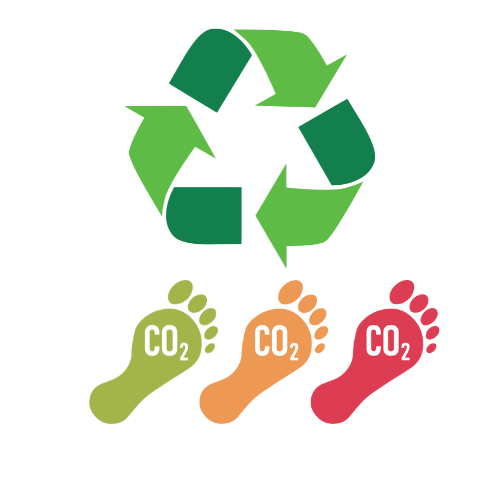
We have incorporated the use of icons into our formulary and guidance to indicate where a medicine is a 'greener' choice.
Our Emollient Quick Reference Guide indicates where an option has fully recyclable packaging including the lid, or comes in a formulation which gives less wastage.
Formulary Chapter 3: Respiratory lists a green, amber or red footprint beside each inhaler to indicate whether it is a low, medium or high carbon footprint option.
We are continuing to incorporate sustainability awareness into our formulary and guidance.
Infant Feeding
Somerset takes a proactive and holistic approach to improving access to safe and effective prescribing while pregnant and breastfeeding. Infant nutrition affects the whole population. By improving access to ratified, evidence-based resources, clinicians across Somerset can support families to reach their personal breastfeeding goals, avoiding early cessation of breastfeeding.
Encouraging and facilitating breastfeeding reduces risks identified by UNICEF (page 88), and the carbon footprint of their treatment, as well as reducing the direct carbon footprint of cow's milk formula and specialist allergy formula. In total, over £17 million could be gained annually by avoiding the costs of treating four acute diseases in infants (the reduced carbon footprint associated with this cost reduction is huge).
The National Diabetes Audit Programme data have shown a 25% increase in those <40 years who were at risk of type 2 diabetes between 2022-23. Facilitating increased breastfeeding rates reduces the risk of Type 2 diabetes in the breastfeeding parent, and UNICEF 2012 report that increasing breastfeeding rates to a level that reduced the rates of early years obesity by as little as 5%, would result in reducing annual health care expenditures by more than £1.6 million.

In Somerset, we have a number of workstreams which aim to improve health and access to treatment during pre-pregnancy planning, the perinatal and postpartum periods and beyond, including:
✔ Clinician education.
✔ A section of our website dedicated to Medicines in Pregnancy, Children and Lactation where you can find a multitude of useful resources for both patients and prescribers.
✔ The ongoing inclusion of evidence based resources within the formulary, prescribing guidance and policies to support the safe and appropriate use of medicines.
✔ Avoiding premature cessation of breastfeeding by facilitating evidence-based treatment to avoid preventable diseases in both mother and baby.
Medicines Waste
It has been estimated that £300 million of NHS prescribed medicines are wasted each year.
The NHS Somerset Medicines Waste campaign was launched in Autumn 2024.
You can find resources to support the campaign on our Medicines Waste webpage.
Here you will also find information on our Green Bag scheme.

Respiratory
NHS Somerset have led the way nationally on a number of sustainable respiratory prescribing workstreams.
We have the lowest prescribing rates of short-acting beta-agonists (SABAs) and high dose inhaled corticosteroids and are amongst the best prescribers in the country looking at indicators that are monitored through Open Prescribing.
Metered dose inhalers (MDIs) and dry powder inhalers (DPIs) require different inhalation techniques and as such it can be confusing for patients to be using a mix of device types (for example a DPI preventer with an MDI reliever). If all devices are inhaled in the same way, technique is improved and medication reaching the lungs is optimal.
Matching the type of device to the patient is critical for control of an individual's condition and adherence to treatment.
"The most cost effective inhaler treatment is the the one which a patient will actually use"
MDIs contain hydrofluorocarbon propellants which are powerful greenhouse gases. As such, MDIs have a carbon footprint many times greater than DPIs and make up the largest proportion of the NHS carbon footprint of any group of medicines. Therefore, if a patient is able to use both MDIs and DPIs, they should be optimised to a single DPI pathway.
Respiratory optimisation has been a priority in Somerset for more than a decade, we have successfully optimised patients across the county in various ways. A single inhaler pathway has been a focus in our Prescribing Scorecard since 2019, when only 26% of patients were on a single inhaler pathway which has now increased to an impressive 89% in March 2024.
This project aims to reduce the carbon footprint of salbutamol pMDI inhalers by safely switching patients to the lowest carbon option.
By far this is a dry powder inhaler, however where a pMDI is deemed most suitable, this can be switched to one of the lower carbon options.
In Somerset, since 2019 carbon emissions (kg CO2e) of salbutamol inhalers have reduced by around 40% and this continues to be a focus in our Prescribing Scorecard.
Greeninhaler.org has useful information on the carbon footprint of inhalers. Resources can also be found on our Respiratory page.
Somerset are the lowest users of high dose inhaled corticosteroids in the country, having focused on improving preventer use and utilising appropriate doses of inhaled corticosteroids. This has had an improvement on condition control which can be seen through our very low SABA use (lowest in the country) as shown on Open Prescribing. This is also reflected in the downward trend of asthma admissions in Somerset.
Individual patient characteristics may indicate triple therapy of LABA/LAMA/ICS in asthma and COPD. We have a workstream aimed at moving those who are currently using two separate inhalers for their triple therapy onto a triple inhaler device.
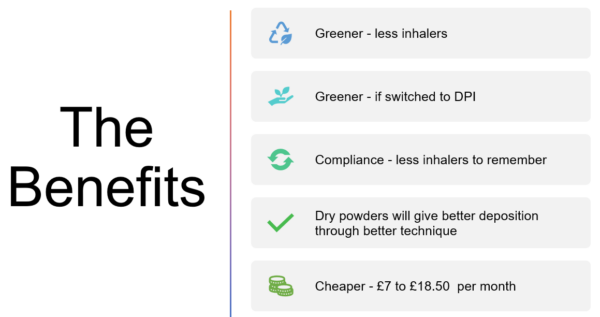
We have also created resources to promote the use of MART where appropriate, in line with NICE guidance.
Our MART poster and digital screen and our Two into One guidance posters can be found on our Respiratory webpage.
Prescribing Incentive Scheme
Our Prescribing and Quality Improvement Scorecard Scheme has included a number of sustainability indicators over the years:
We have had several respiratory indicators which focus on reducing the carbon footprint of inhalers. We advocate the use of brands which have a lower carbon footprint over the higher carbon options, as well as prescribing refills where appropriate and only prescribing a new re-usable device when it is required. We have done a great deal of work on improving condition control by moving patients onto a single inhaler pathway. We promote the use of MART and triple therapy where indicated. See Respiratory section for more information on the work we have been doing in this area.
We have an indicator which focuses on ensuring that diabetic patients have all 8 care processes undertaken in the last twelve months. Improving outcomes and reducing risks for diabetic patients is important and reduces the likelihood of needing potentially avoidable treatments, which of course has carbon footprint implications.
We have several indicators focusing on deprescribing, including reducing opiate prescribing, reducing anticholinergic burden and reducing the number of patients with learning difficulties and/or dementia that are inappropriately prescribed antipsychotic medication.
Many of our other scorecard indicators have a green impact, see our Scorecard page for more information.


Skills Not Pills
Healthwatch Somerset have some useful information for patients on Social Prescribing.
On our Pain Management page you will find information and resources to support reducing inappropriate opiate prescribing and managing pain using skills, not pills. Resources include analgesic tapering guidelines ('skills not pills' deprescribing resources), information on the opiate reduction advice and guidance service, getUBetter app, Live Well with Pain resources and Pain Cafes.
Reducing opiate prescribing is an indicator on our Prescribing and Quality Improvement Scorecard scheme.
Useful Links
-
Sustainable Healthcare Networks Hub – Sustainable Pharmacy Network and Sustainable Primary Care Network