

Around a third of people aged 65 and over, and around half of people aged 80 and over, fall at least once a year.
Falls prevention -
Falls assessment & fracture risk
Deprescribe fall-risk-increasing drugs e.g. opioids, benzodiazepines and antihypertensives, antipsychotics, antidepressants if appropriate.
Prescribing Guidelines by Clinical Area

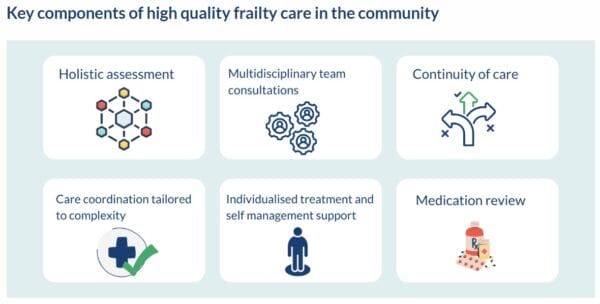
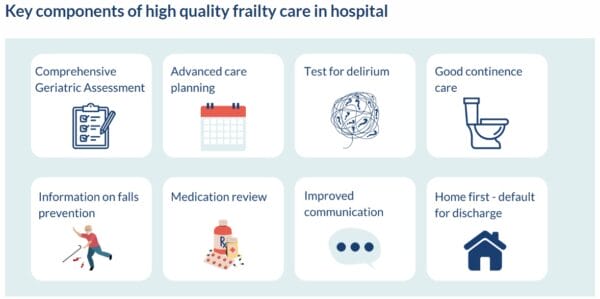
Frailty: research shows how to improve care
Without preventive action, frailty will become more prevalent as population ages. Number aged >85 with moderate/severe frailty expected to double between 2016 & 2041.
This Collection brings together evidence to help commissioners and healthcare providers address the challenge.
BGS issues stark warning to the new government ahead of winter
The BGS, supported by 23 organisations including six medical Royal Colleges, has expressed grave concerns about the impact of the winter months on the health and wellbeing of older people.
The BGS proposes seven evidence-based actions that will make a sustainable difference to older people’s care across the UK. These aim to ensure that older people with frailty and multimorbidity are able to access the care they need over the winter months.
Comprehensive Geriatric Assessment (CGA) Hub is a powerful, evidence-based approach to improving care for older people. By ensuring holistic assessment and coordinated intervention, CGA supports better outcomes across acute, primary, and community settings.
End of Life Care in Frailty: Medicines management
To support clinicians and others to consider the needs of frail older people as they move towards the end of their lives and help them to provide high quality care.
Pragmatic prescribing to reduce harm for older people with moderate to severe frailty
To support prescribing decisions for older people with moderate to severe frailty. This information can be incorporated into shared decision-making conversations. It provides more lenient therapeutic targets than standard guidelines, balancing potential benefits and harms of medicines in this population. The guidance is designed for all prescribers involved in medicines optimisation across primary and secondary care settings.
Core20PLUS5 Framework: Reducing healthcare inequalities among older people
This framework for reducing healthcare inequalities among older people is based on similar existing frameworks from NHS England for adults, children and younger people. It aims to help identify people within the population who have unequal access to and experience of healthcare, and to target action to counter that inequality.

These standards promote positive, healthy and active aging. In line with the principles of Realistic Medicine, the standards are underpinned by the following key principles:
Services should have a focus in prevention and early intervention
People’s choices and what matters to them should be at the centre of discussions
Interventions should be the least intrusive or restrictive possible

- Frailty as a long term condition
- Falls
- Immobility
- Delirium
- Incontinence
- Medicines optimisation
- Multimorbidity
- Sharing information
- Workforce development

Summaries of the evidence on the benefits and harms of treatments for long term conditions.

Polypharmacy: getting the balance right
Supporting healthcare professionals to identify patients at potential risk from problematic polypharmacy and support better conversations about medicines.